For thirty years, looking good was a shortcut.
A sharp website, tidy photography, clean copy. That told a buyer you were a serious operation, because polish used to cost real money and real time. Polish was evidence.
That shortcut broke this year.
The signal has collapsed
Anyone can now produce a good-looking page in an afternoon. Clean layout, confident headline, moody hero image of a factory that does not exist. When everyone can look expensive, looking expensive stops meaning anything.
Worse, it has started to count against you.
Klaviyo and Datalily surveyed 8,000 consumers across eight markets in December 2025. When people spot AI-generated content in a brand's marketing, they are four times more likely to trust that brand less rather than more. Thirty-one percent against seven. YouGov found roughly 55 percent are uncomfortable seeing AI-generated brand content in their feeds at all.
B2B is stranger still. Around 94 percent of buyers now use AI tools to research suppliers, while more than half of those same buyers say they distrust AI-generated content. Read that twice. They use the machine to find you, then they check whether a human actually built what they found.
So the buyer arrives at your site already suspicious. Not of your engineering. Of your evidence.
What buyers are paying for instead
Le Creuset makes cast iron in a foundry at Fresnoy-le-Grand in France. For years they have opened that foundry to cameras, press tours and visitors, showing that a single Dutch oven takes seven days to produce. This year they pinned a comment on an Instagram post spelling out that the video was made entirely by hand, digital art and real footage, not AI, with backgrounds filmed in Collioure. The comments filled up with people talking about that decision rather than the cookware.
Dove pledged in April 2026 never to use AI-generated content to represent real women in its advertising.
Notice what those are. Not design choices. Evidence claims. Both brands are saying the same thing: a person did this, in a place, and you can check.
Le Creuset is a foundry. That is the whole point. They win on brand because they let you watch the metal.
You already own the scarce thing
Industrial businesses have spent decades hiding the exact asset that is now in short supply. Real work, done by named people, on real machines, to measurable tolerances.
Putting real proof in front of buyers is the most effective industrial branding move available right now.
Four ways to put it back on the table.
Trade adjectives for numbers. "High precision" is free, so it is worthless. "We hold plus or minus 0.02 mm across a 1.2 metre part, verified on a CMM before it leaves" cannot be faked by a competitor or a language model. Every generic adjective on your site is a sentence a chatbot would have written for anyone.
Name people. Not "our experienced team". The welder with 22 years on pressure vessels. The person who answers the phone at 6am. Names carry risk, which is exactly why they carry weight.
Date and locate your case studies. A job with a month, a site, a part number and a result reads as a record. A job without them reads as marketing.
Show the ugly parts. The failed first run. The tolerance you had to argue about. Nobody generates that, because it is inconvenient, and inconvenient is now a trust signal.
Two industrial brands doing it properly
PLENCO rebranded in April 2026 after more than 90 years making thermoset resins and composites for critical infrastructure. New identity, new site, new line: Together Through Chemistry. What stands out is a comment from VP of Operations Adam Brotz. "This rebrand is not about a logo. It is about alignment. It reflects who we are today." The specificity sits in the claim, not the mark.
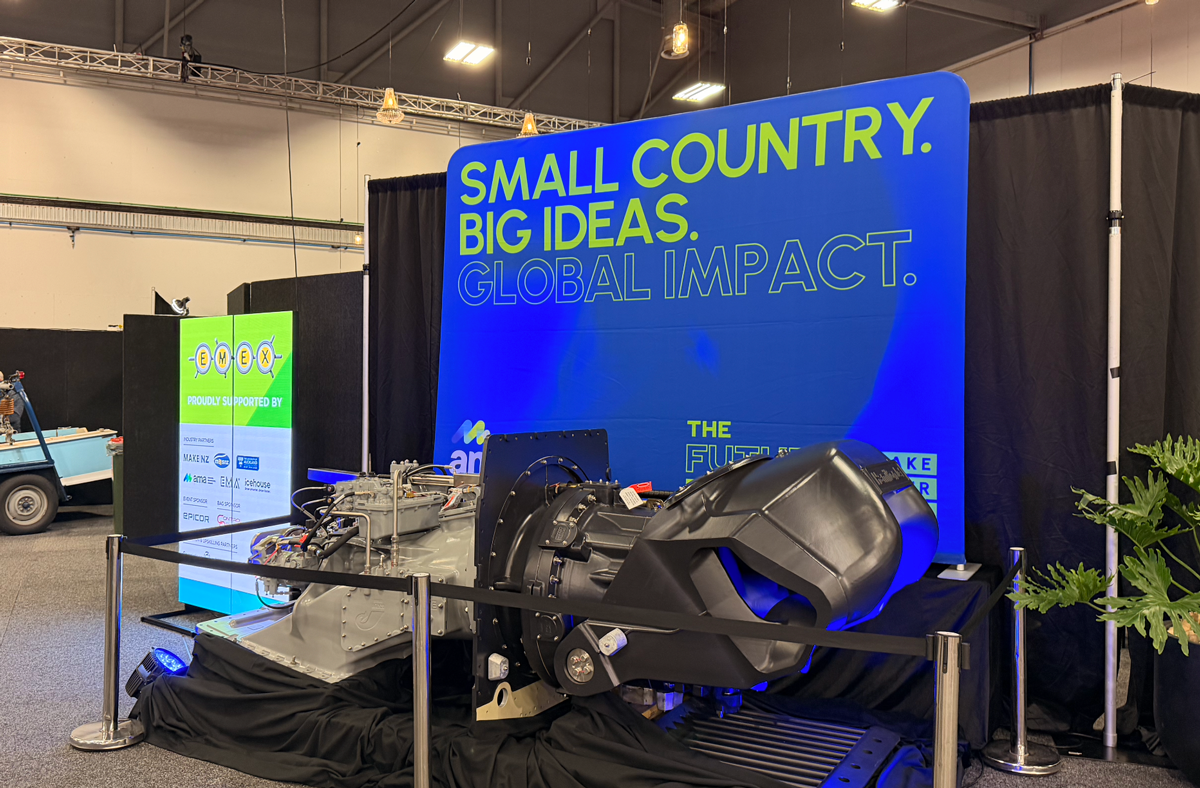
Vortec unveiled a new identity on 1 September 2026. Industrial air solutions, positioned around reducing downtime and protecting equipment in increasingly automated plants, with four named capabilities: enclosure cooling, spot cooling, blow-off and air movement. Just as telling, the rollout covers product packaging, technical literature and exhibition stands, not only the website. Proof has to live where the buyer physically meets you.
This is not a small-company game either. In Brand Finance's Engineering 50 for 2026, John Deere holds an AAA+ brand strength rating with brand value of 15.1 billion dollars, up 12 percent. Caterpillar sits at 21 billion, up 14. Nobody buys a Deere because the website is tidy. They buy it because forty years of specific, checkable behaviour built a promise.
A five-minute test
Print your homepage. Cross out every sentence a competitor could paste onto their own site without lying.
What survives is your brand.
If the page is mostly crossed out, you do not have a copy problem. You have a proof problem, and no amount of design will cover it.
Next step
If you want a straight read on where this is costing you, take our free Industrial Brand Health Check. It takes two minutes, it scores where your brand is quietly losing you work, and it tells you what to fix first.
If you are considering brand or marketing services, view our products and pricing here.
Case studies